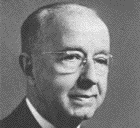
 Shewhart's
Bell Laboratories has a long history in statistics, dating back to
Shewhart's
invention of control charts in 1924 and Dodge and Romig's development of double-sampling inspection plans in the 1930's. Shewhart also contributed to the area that is now called robust statistics.
After World War II, John Tukey
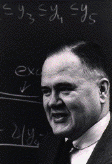 embarked on his dual career
at AT&T Bell Labs and
Princeton University, carrying out his pioneering work in spectrum analysis, the Fast Fourier Transform, multiple comparisons, exploratory data analysis, and a host of other topics in statistics.
The first person hired
as a statistical researcher (in 1952) was
M.E.Terry
 .
Statistics research at Bell Labs grew to about its present size between 1959 and 1969. Among the early recruits were
M.B.Wilk
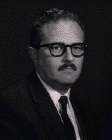 ,
R.Gnanadesikan
 , and
C.L.Mallows
 .
With the break-up of the Bell System in 1984, about 1/3 of the group went to Bellcore. Statistics research grew back to about its previous size a few years later. In 1996 with the break-up of AT&T, Bell Laboratories became the research and development arm of Lucent Technologies. About 1/3 of the statistics research group moved to AT&T, as part of the new AT&T Laboratories. Statistics research at Bell Labs has since grown to 17 researchers.
Statistics research at Bell Labs has always been at the forefront of statistical computing, data analysis and methodology. Contributions in the past five to ten years have included locally weighted regression, generalized additive models, inference in the presence of sample selection bias, algorithmic statistical process monitoring, and robust design of experiments. Many of these tools were developed and refined during the course of collaborations with engineers, scientists and other subject matter experts at AT&T and Lucent. For example, work on flexible discriminant analysis grew out of work on automatic handwriting recognition. Of course, statistics research has been the leader in statistical computing ever since John Chambers introduced the first version of S, a language for computing with data.
Recently, there have been major changes in the directions of the field of statistics. Statistics Research at Bell Laboratories continues to be at the forefront. The newest version of the S language interacts with Java, enabling distributed data analysis and web-based statistical reporting. It also incorporates multi-threading, greatly simplifying the development of graphical user interfaces for data analysis. In the area of graphics, Bell Labs researchers have developed trellis displays for visualizing the structure in large, complex sets of data or highly structured fitted models. In the area of methodology, statistics research continues to press forward in nonparametric function estimation, developing more flexible tools for fitting models to data, such as local regression and extended linear modeling. It has also taken on new topics, such as Bayesian data analysis and computing, nonlinear mixed effects models, and classification when the data are high-dimensional curves. In the area of massive datasets, statisticians at Bell Labs have recently developed new methods for filtering very large databases to find ``interesting'' events in real-time.
Increased demands for our knowledge from the many business units of Lucent Technologies are leading to more exciting collaborations. Extensive data collection throughout Lucent Technologies has created new opportunities for statisticians to become involved with increasingly complex and massive datasets in areas such as customer value analysis, optical fiber production, network performance, and equipment reliability. These kinds of collaborations are not only critical to the success of Lucent but also provide the testbeds for new ideas about analyzing, visualizing, and computing with data. These are exciting times for Statistics Research at Bell Labs.